
Rusk County Arrest Warrants Explained
A Rusk County arrest warrant authorizes arrest. It takes a judge first. The judge or magistrate must find probable cause under the law. A bench warrant is different, because it usually follows a missed obligation inside a case already open. Which court starts the process depends on the charge: district, county, JP, or municipal. No countywide public warrant search exists. The issuing court stays the best place to confirm the court record and ask what it can disclose.
Rusk County Affidavits Move Through Courts and Agencies
Every Rusk County complaint starts with a sworn statement. An affidavit or sworn complaint goes to a judicial officer authorized to act. Texas Code of Criminal Procedure Chapter 45A supplies a probable-cause model for Class C cases, though other charges can follow different statutory procedures. The officer weighs the facts presented. Process issues when the standard is met. A sealed affidavit or an active investigation can keep the papers from public view until service. The court record and the law-enforcement entry are related but distinct records, so ask the clerk which cause file exists and ask the agency about service or custody. The state code page gives the statutory context.
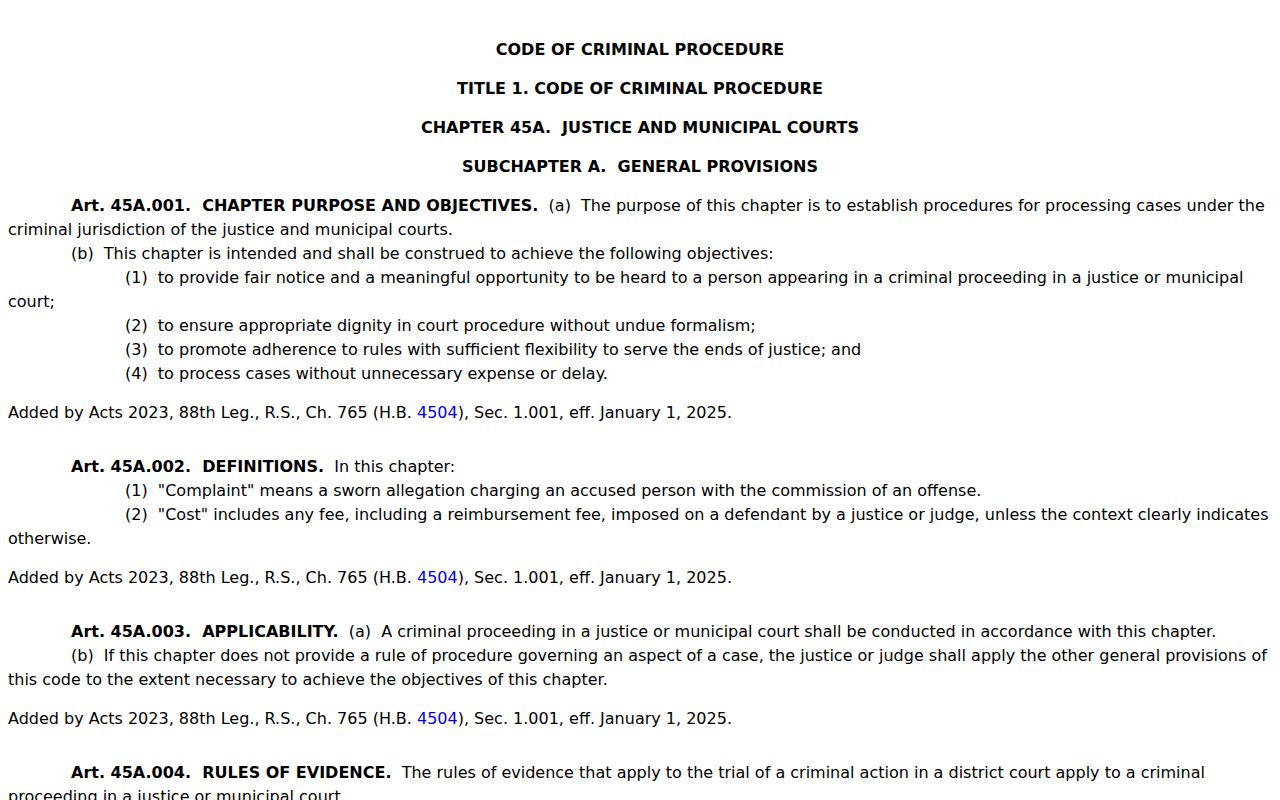
Other warrant types in Rusk County can rest on different chapters and facts, so treat this section as general context only.
Inside a Rusk County Arrest Warrant
A warrant record can name the issuing court, the case or process number, the offense, the direction to an officer, bond conditions, and any later service or recall action. Which fields are public varies. A sealed or restricted document may stay closed. Rusk County publishes no common warrant-number pattern. Any sample code floating around is invented, not a real format.
| Issuing authority | Judge or magistrate and court that directed the process. |
|---|---|
| Cause or process number | Use the number shown on a notice when contacting the clerk. |
| Offense and date | Read alongside the case file and charging instrument. |
| Bond or conditions | Confirm current terms with the court or jail; labels can change. |
| Service or recall | A later return or recall entry may be held by a court or agency. |
Rusk County Court Records and Sheriff Service Are Separate
Where a file lives depends on the court. Each office holds a different piece. Felony files from the Fourth Judicial District Court route to the District Clerk. County Court and County Court at Law records go through the County Clerk. A JP or municipal court may hold lower-level process. Deputies, constables, city police, or a marshal may serve the paper in Rusk County. The serving agency is not the case-file custodian. For the Fourth District Court, the coordinator is listed at 903-657-0358, and District Clerk criminal and civil records are at 903-657-0353. Call the exact court named on a document before relying on another office's search result.
Serving Arrest Warrants in Rusk County
Once a Rusk County warrant issues, the court or clerk can send it into law-enforcement systems. Who serves it varies. Authorized officers include county deputies, constables, city police, a city marshal, or another agency with authority. Serving the paper settles nothing. Recall belongs to the issuing court alone. A booking creates its own record. It carries separate fields and timing from the warrant file. The Sheriff's Office sits at 210 W. Charlevoix Street in Henderson, and the jail phone is 903-655-3000. For service or booking questions, use the agency channel the court identifies, and confirm case status with the issuing court in Rusk County.
Rusk County Custody Records Do Not Prove Every Warrant
The InteropWeb listing the sheriff links shows current inmates and recent arrests. Labels include arrest date, agency, days in jail, total bond, and warrant counts or statutes. It explains a booking, not the county's warrant inventory. Someone missing can still have open process. An old booking on display does not prove a current warrant either. Read the bond field with care. A roster count or bond amount does not reveal active status. Ask the Rusk County court and the jail what each field means for that case.
Arrest Warrants, Summonses, and Bench Warrants Compared
A summons orders a person to answer a case. It does not authorize arrest. A bench warrant follows a missed court duty in an open case, while an arrest warrant follows a probable-cause review. Labels blur in everyday Rusk County talk. Ask the court which document it issued and what response it requires.
| Process | Trigger | First verification route |
|---|---|---|
| Arrest warrant | Judicial probable-cause process | Issuing court or attorney |
| Summons | Notice to appear or respond | Court clerk named on notice |
| Bench warrant | Missed date or court obligation | Court that set the obligation |
Rusk County Arrest Warrant Status Needs Direct Verification
An online index can lag, and an arrest affidavit may stay sealed. TCIC and NCIC serve law enforcement only. No public self-service access exists. The Rusk County Sheriff's page links no current warrant roster. A name returned by a court index still needs confirmation of the cause and process with the issuer. A blank result proves nothing. Check the likely lower court or city system too. Match the court to the document, since a city arrest, a JP traffic matter, and a felony file draw on different sources.
Handling an Arrest Warrant in Your Name
Start with the paperwork. Write down the issuing court and the cause number before anything else. Then get a lawyer involved in Rusk County, because counsel can weigh whether to call the clerk, ask for a hearing, arrange a surrender, or work out bond. Conditions the court sets may shift with the offense and the record. An old PDF or a payment page is no way to decide when to appear.
Important: If a current warrant may involve you, get legal advice before approaching law enforcement, appearing in court, or discussing case facts.
Keep your Rusk County paperwork close. Hold onto every filing, receipt, and setting notice, and confirm the recall was actually entered, since a payment or bond may not clear each separate hold.
Rusk County Arrest-Warrant Access Has Limits
The Texas Public Information Act opens one door, not all of them. Requests can seek existing agency records in Rusk County, but law-enforcement exceptions, sealed materials, and juvenile confidentiality can block release. Court files play by different rules. Those may fall under judicial-record access rules and clerk fees instead. Ask the sheriff or the court which law governs your specific record. For county-level routes, and the split between court and custody sources, see the Rusk County warrant records overview. A public document is not an instruction to arrest, search, or contact the person named.